 by
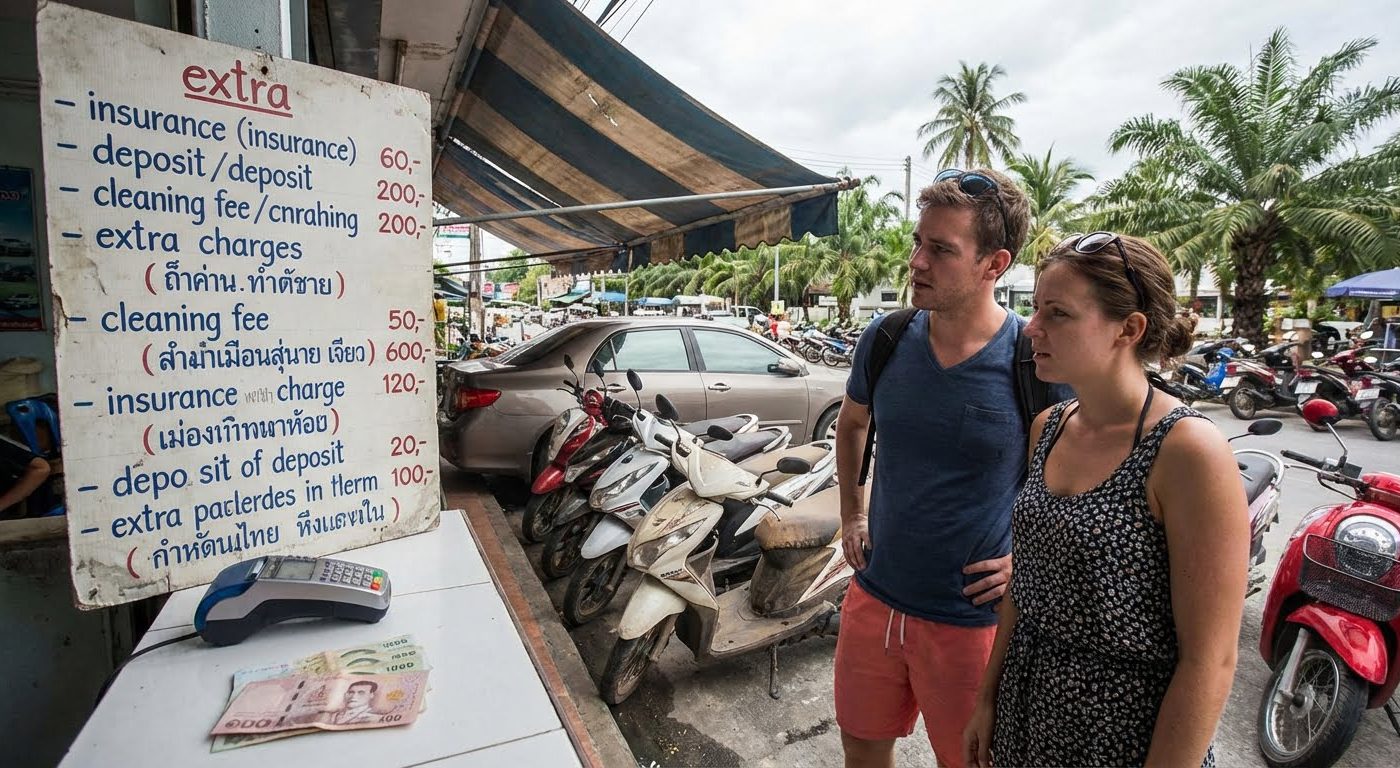
by Phuket recorded 8.65 million visitor arrivals in 2024 — a 23% jump from the prior year, according to C9 Hotelworks market research. Fleet availability tightens fast in peak season, prices vary between platforms, and the gap between the advertised rate and the final invoice can genuinely surprise first-timers. Savvy travelers using car rental Phuket services know to look past the headline number and model the total cost before booking.
Here’s how to do that.
Why a Car Makes Sense in Phuket — But Only in Some Cases
Phuket is large enough that taxis and tuk-tuks become expensive quickly. The island is about 48 km from north to south. If your itinerary covers multiple beaches — Patong, Kata, Nai Harn, Rawai — or you want to reach quieter spots like Laem Singh or Banana Beach without negotiating fares each time, a rental car pays off in two or three days.
Where it doesn’t make obvious sense:
- Staying in Patong or Kata Noi only — walkable area, ride-hailing works fine
- No experience driving on the left — Thailand drives on the left; this matters more in heavy Patong traffic than on open roads
- Relying on a motorcycle license only — car rental requires a separate car license category
For multi-day itineraries covering the whole island or day trips toward Phang Nga Bay, a car earns its cost clearly.
Breaking Down the Real Cost of a Rental
The advertised daily rate is the beginning of the calculation, not the end. A transparent budget for a 4-day Phuket rental looks roughly like this:
| Cost item | Typical range |
| Base rental rate (economy sedan, 4 days) | $60–100 |
| CDW insurance (collision damage waiver) | $20–40 total |
| Security deposit (blocked on card, refunded) | $200–400 |
| Airport pickup surcharge (if applicable) | $8–20 |
| Fuel (4 days, ~350 km estimated) | $12–18 |
| Total cash outlay | $100–178 |
The deposit isn’t a cost — it’s a hold that releases when you return the car undamaged — but it affects how much card headroom you need at pickup. Plan for it.
Fuel in Phuket runs around 42–46 THB per liter (~$1.20 USD). Most rental cars take regular unleaded (benzin 95). Fill up at PTT or Bangchak stations, which are the most reliable and clearly labeled.
What to Compare When Choosing a Supplier
Not all rental companies operating in Phuket use the same pricing structure or the same terms. The platform you book through matters as much as the price it quotes.
Key things to verify before confirming:
- Excess/deductible — what you pay if the car is damaged, even with CDW
- Tire and windshield coverage — commonly excluded; Phuket’s construction-zone roads are hard on both
- Mileage cap — some budget operators cap at 150–200 km/day; exceeding it triggers per-km fees
- Damage documentation at pickup — photograph every existing scratch, including roof and bumpers
- 24-hour roadside support — verify a local Thai phone number exists
The cheapest aggregator price isn’t always cheapest after mandatory add-ons. Read the supplier’s direct terms before confirming.
Documents, Age, and the License Question
Thailand allows foreign tourists to drive with a valid national license — but most reputable rental companies in Phuket also require an International Driving Permit (IDP). The IDP must be obtained in your home country before travel; it cannot be issued abroad.
Required at pickup (most operators):
- Valid national driver’s license with photo
- International Driving Permit (IDP)
- Passport
- Credit card for the security deposit
Minimum rental age is 21. Drivers between 21 and 25 typically pay a young driver surcharge of $3–7 per day. Some companies set a 23-year minimum for SUVs and premium vehicles.
Driving in Phuket: What to Actually Expect
Phuket’s roads are a mixed experience. The coastal highway (Route 4028) connecting the west-coast beaches is well-paved and straightforward. Traffic in and around Patong — particularly near the beach road and the hill tunnel — gets genuinely congested between 5 and 8 PM. The road to the Big Buddha is steep and narrow in sections but passable in any standard car.
Road safety is a real concern on the island. The WHO reports that Thailand has one of the highest road traffic death rates in Asia — 25.4 per 100,000 population — with motorcycles involved in the vast majority of fatal accidents. For car drivers, key risk factors are night driving on unlit rural roads and heavy traffic in tourist areas. Defensive driving and avoiding unfamiliar mountain routes after dark reduces risk significantly.
Parking at beaches, temples, and shopping centers fills up by mid-morning in high season. Chalong Temple and the Big Buddha have free dedicated parking.
FAQ
Most rental companies in Phuket require an IDP alongside your national license, particularly if your license is not in English or Roman script. Get one before you travel — they’re issued by national automobile associations and typically cost $15–20 USD.
It depends on your plan. Two days covering only Patong and Kata probably isn’t worth it — taxis and ride-hailing are cheaper. Two days covering Rawai, Chalong, the east coast, and Phang Nga Province makes a rental genuinely efficient.
Check with your specific operator. Many allow inter-province travel but require prior notification. Some charge a cross-province fee or restrict coverage to Phuket only. Confirm before you go, not after.
Call your rental company’s Thai support number immediately. Document everything with photos. Don’t move the car if the damage involves another vehicle. Most reputable operators provide roadside assistance within 1–2 hours in Phuket.
For standard Phuket sightseeing — beaches, temples, viewpoints, restaurants — a compact sedan handles everything. You only need an SUV if you’re doing off-road tracks or transporting 4+ people with significant luggage.